After graduating from university with a degree in psychology and labour studies, Chelsea Kaufmann enrolled in PACE’s Human Resource Management program to gain the skills she needed to follow her passion and find employment.
“Nowadays, it can be very difficult to find a job with a general bachelor’s degree,” she said. “I chose PACE because it seemed like it offered a more concentrated view in the field that I was interested in.”
During the program, Kaufmann got the opportunity to intern with the Manitoba Association of Health Care Professionals and is now working with the organization as a Labour Relations Officer. She says her experiences at PACE helped prepare her for the demands of the workplace.
“PACE provided me with exposure to the professional world, it wasn’t all about learning straight from a textbook,” Kaufmann said. “It was about learning from professional’s real-life experiences and learning by doing projects that help prepare you for the real world.”
Thanks to the program’s talented instructors, small class sizes, condensed course delivery, and networking opportunities Kaufmann says she “grew so much both professionally and personally” during the ten-month program.
Chelsea Kaufmann Labour Relations Officer Manitoba Association of Health Care Professionals
Samantha Pomareda is passionate about helping others. That’s why she enrolled in PACE’s Human Resource Management program as a mature student after a nearly 20-year career with CancerCare Manitoba.
“I came to a point where I needed a new and rewarding role in my life,” says Samantha. “Having family responsibilities, I wanted a program that could ensure a successful new beginning for my life.”
Samantha credits the PACE program with helping her find her voice and become more confident in her abilities. Her favourite part of studying at PACE was the streamlined design of the curriculum and the staff and instructors who truly want to see students succeed.
Nikki Vieira is currently a Senior Talent Acquisition Advisor at Canada Life. Nikki found the PACE Human Resource Management Diploma provided her with the tools to succeed and achieve her career goals. Her current role involves managing the end-to-end recruitment for various lines of business at Canada Life. She also assists in the development of recruitment plans with hiring managers and collaboratively works with HR business partners and advisors to anticipate talent requirements, and attract / source top talent.
It was important for Nikki to take a program that met her scheduling requirements as she was working full-time. “The PACE HR program is well structured, accommodates part-time schedules, and is led by instructors with real world experience in the human resource profession,” says Nikki. She believes that having those real-world experts teaching provided her opportunities to learn about the various career options within the field, which in turn allowed her to explore how each course aligns in the larger human resource profession. “There is no doubt that the quality of education I received at PACE enabled me to advance my career to the next level.”
Nikki enjoyed the informal networking opportunities available within her own classroom. Through networking with classmates and instructors that were already established in the human resource profession she gained a greater understanding of the different evolution of career paths. “Informal networking helped me develop softer skills, such as building relationships and developing a rapport with my peers — skills that I’ve found very applicable in my daily work.”
“PACE was an easy decision for me with its excellent reputation, availability of part-time evening courses and culture.” She also appreciated that the PACE community was very welcoming and offered many affiliations and connections with the external job markets. As such, she recommends the programs to anyone looking to achieve their career goals.
Nikki Vieira Diversity, Equity and Inclusion (DEI) Talent Acquisition Partner Canada Life
To say Gavin Walls has had a diverse career would be an understatement.
He has worked as a rig operator in Manitoba, as an operation manager in Alberta’s oil and gas industry, and in Indigenous development with First Nation communities — not to mention his successful eight-year career as a professional athlete, including as a star defensive player for the Winnipeg Blue Bombers.
Gavin chose to enroll in PACE to align and enhance his wide-ranging skill set. He is currently in the home stretch of the Project Management Diploma program and hopes to pursue a career in either construction or professional sports upon graduation.
“I chose PACE because it offered a project management program that is relevant to industry specifics, standards, and best practices,” he says. “I really enjoy the opportunity to work in team dynamics, improving time management skills, planning, risk management, problem solving, and fulfilling untapped knowledge areas within projects.”
As a PACE student, Walls says he has benefited from instructors who make complex theories accessible and bring real world examples into the classroom.
“The program is a perfect fit for me because it is unique, challenging, rewarding, and success is celebrated within a team setting.”
Through PACE, Deane was able to turn his curiosity into a career, thanks to diverse course options, and instruction from industry experts.
As an employee with the Government of Manitoba, Chris Deane was exposed to the many different aspects of communications and public relations. His burgeoning interest in the field led him to PACE and the Public Relations, Marketing and Strategic Communications diploma.
Through PACE, Deane was able to turn his curiosity into a career, thanks to diverse course options, and instruction from industry experts.
“By having instructors that are currently experts in their field, students can gain valuable industry insights and build a network at the same time,” he said.
He also appreciated the small class sizes, which fostered the creative environment necessary for success in the public relations field.
Deane now employs his skills as Customer Experience Champion for Western Financial Group. In his role, he’s responsible for the development and execution of marketing strategies, trade-show coordination, and website design, among other tasks.
Deane stresses the importance of networking in public relations, and credits the program for providing opportunities to engage with professionals. He advises anyone starting PACE to similarly take advantage of every support opportunity afforded to them.
“Every person you meet in the program, whether it is an instructor or classmate, is an outlet and wants to see you succeed.”
Chris Deane Customer Experience Champion Western Financial Group
Public Relations & Strategic Communication Diploma
Stephanie Johnson knew she enjoyed writing and ideas, but wasn’t sure how to translate those skills into a career.
Prior to attending PACE, Stephanie worked in the service industry as a bartender and was looking for a change. She knew she enjoyed writing and ideas, but wasn’t sure how to translate those skills into a career. PACE helped her find her way in the field of communications after earning her Public Relations, Marketing and Strategic Communication Managment Diploma. She is now the Communications Manager at the Tamarack Recovery Centre.
“I find I use the skills I learned at PACE daily in my work to help promote awareness around addiction and recovery,” said Johnson.
PACE refined Johnson’s natural ability to communicate.
“I became a truly effective writer, speaker, and communicator. PACE taught me the inner workings of communications, which has been invaluable.”
Stephanie liked the balance between theory and practical experience at PACE. The program gave her the tools she needed to transform her career. She was able to learn first-hand from accomplished industry professionals that provided relevant real-world practices.
“I can confidently rely on any of the skills I learned from my instructors,” says Stephanie. “I know I am effective in my work due to my education at PACE.”
Advanced Diploma In Leadership In Early Childhood Care & Education
Programs Page
This program is designed for professionals working in the early childhood care and education sector. The program has been approved by the Manitoba Government’s Child Care Education Program Approval Committee (CCEPAC) as a route towards achievement of ECE III classification when combined with a current ECE II. It is a unique combination of courses from the Professional Studies Program Area and the Developmental Studies Degree Program.
Costs may vary depending on mode of course delivery and are tentative.
Please budget approximately $800 for textbook costs. Textbook costs may vary depending on new, rental, used, or electronic purchasing choices. Textbooks are a requirement. Please budget approximately $400 for UW Annual and Term Fees
For more information regarding tuition & fees and payment options, click here.
This program requires a dual application process. For admission to this program students must complete the UWPACE and degree-credit studies Application for Admission forms and submit originals of all required documentation.
Academic Requirements
Be a high school graduate or hold a Mature Status Diploma.
MUST provide High School Transcript or recognized equivalent GED or Mature Grade 12 Diploma.
OR
Be 18 years of age or older and have completed 90 hours of coursework or more at a recognized post-secondary institution (including UWPACE) with minimum cumulative GPA of 2.5 or higher.
MUST provide an official transcript for all previous post-secondary study (including university, CEGEP, or private college).
Additional Requirements
Advanced Diploma in Leadership in Early Childhood Care & Education
ECE II- Early Childhood Educator Level II must be provided with application.
English Language Requirements
Applicants whose previous education was completed outside of Canada and where English may or may not have been the medium of instruction, must submit proof of meeting one of the accepted English language proficiency measures. Download the UWPACE English Language Requirements (PDF) for additional English proficiency tests and programs and waiver options for the English language requirement.
The program consists of two components: the Core Courses and Elective Courses. Students may take the courses in any order as long as they have the required prerequisites. Students have up to five years to complete the 360 hours of study. Students may condense their studies by taking more than one course per term.
Please note the following courses are degree-credit courses offered at The University of Winnipeg main campus. Students are encouraged to take them in the latter part of the program.
I graduated from the Educational Assistant Diploma program after five years of part-time study in 2011. I was motivated to pursue this program to obtain current strategies and techniques to teach children in a classroom setting.
I was a stay-at-home mother for nine years. I was a volunteer at Ecole Crane and a Girl Guide leader for four years. I previously worked for 13 years in various administrative positions in Ottawa as an Executive Assistant, Secretary, Program Manager and Meeting Planner for the federal government, The Chemical Institute of Canada and for a major international conference. I have an Honours’ Bachelor of Science in Language (translation degree) from Laurentian University and a Bachelor of Arts in Psychology from the University of Ottawa.
I was hired full-time by Pembina Trails School Division in 2005 as an Educational Assistant at Ecole Viscount Alexander, a French immersion middle years’ school, grades 5 to 8. I felt that it was important to further my education to be more effective and current in the classroom. Due to the stigma attached to the label “stay-at-home mother “and the fact that this position is not fully valued, I felt it was important to update my education. I also believed that it might be mandatory in the future for EAs to have the EA Diploma to better serve the school community. The instructors at U of W were dynamic, current and told interesting examples to support the subject. The program is valuable in explaining school structures, learning styles, behavioural methods, disciplinary challenges and above all, the uniqueness of all students and the importance of finding a way to connect with each and every one of them.
In October 2011, I started a lunch-time craft club to entertain students instead of outdoor recess on cold days and other undesired activities. The club had seven participants at first and quickly increased to an average of 25. Once, there were 45 students. I have always enjoyed hands-on activities liked crafts and, as it turns out, so do many students. Anything goes at craft club so long as you’re quiet, polite, speak French and do something creative. I thoroughly enjoy connecting with students in this way. It is an excellent way to learn social skills and a safe place for students who find the lunchroom too noisy. The club runs daily and continues to be popular.
In conclusion, as a result of the EA Diploma program I have a fulfilling job as an EA and a fun-filled lunchtime activity. I enjoy my work at EVA very much and know I can make a difference. I believe in life-long learning; it’s never too late.
To view details of Diane's craft club please click here
Diane Goltz Educational Assistant Ecole Viscount Alexander
People are an organization's greatest asset, and effective human resource professionals play a critical role in attracting talent, developing employees, supporting organizational culture, and driving business success.
The Human Resource Management Diploma prepares students with the practical knowledge, leadership skills, and business expertise needed to succeed in today's evolving workplace. As a CPHR-accredited program, the curriculum aligns with nationally recognized professional standards while combining foundational human resource management with leadership development, communication, and strategic business practices.
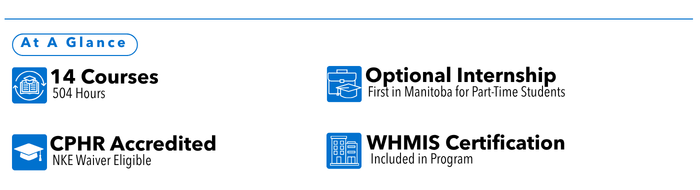
Students develop practical skills in recruitment, employee relations, compensation, organizational development, employment law, workplace health and safety, and performance management. The program also includes the opportunity to earn WHMIS certification and participate in a part-time internship—an opportunity unique to PACE that allows students to gain valuable real-world experience while completing their studies.
Upon graduation, students earn a Human Resource Management Diploma and are eligible to begin the process toward earning the Chartered Professional in Human Resources (CPHR) designation, including potential eligibility for a National Knowledge Exam (NKE) waiver.
Please budget approximately $1,500 for textbook costs. Textbook costs may vary depending on new, rental, used, or electronic purchasing choices. Textbooks are a requirement.
For more information regarding tuition & fees and payment options, click here.
Costs may vary depending on mode of course delivery and are subject to change.
The Human Resource Management Diploma develops the knowledge, leadership skills, and practical experience needed to support people, organizations, and business success.
Throughout the program, students will learn to:
Apply human resource management principles across the employee lifecycle.
Recruit, develop, and retain talented employees.
Understand employment legislation and workplace compliance requirements.
Support organizational development and employee engagement.
Develop compensation and performance management strategies.
Strengthen leadership, communication, and decision-making skills.
Outcomes
Upon successful completion of this diploma, graduates will be able to:
Support organizations through effective human resource practices.
Apply employment legislation, workplace health and safety requirements, and HR best practices.
Conduct workforce planning, recruitment, and talent acquisition activities.
Develop employee learning, development, and performance management strategies.
Foster positive workplace cultures that support engagement and productivity.
Design compensation and benefits strategies that align with organizational goals.
Communicate effectively with employees, leaders, and stakeholders.
Apply ethical and strategic decision-making to human resource challenges.
Be a high school graduate or hold a Mature Status Diploma.
MUST provide High School Transcript or recognized equivalent GED or Mature Grade 12 Diploma.
OR
Be 18 years of age or older and have completed 90 hours of coursework or more at a recognized post-secondary institution (including UWPACE) with minimum cumulative GPA of 2.5 or higher.
MUST provide an official transcript for all previous post-secondary study (including university, CEGEP, or private college).
English Language Requirements
Applicants whose previous education was completed outside of Canada and where English may or may not have been the medium of instruction, must submit proof of meeting one of the accepted English language proficiency measures.
Download the UWPACE English Language Requirements (PDF) for additional English proficiency tests and programs and waiver options for the English language requirement.
Chartered Professional in Human Resources (CPHR) Accredited
The Human Resource Management Diploma is accredited by CPHR Manitoba, ensuring the curriculum aligns with nationally recognized professional standards.
Upon successful completion of the program, graduates may be eligible to apply for a National Knowledge Exam (NKE) waiver, an important step toward earning the Chartered Professional in Human Resources (CPHR) designation.
To qualify for the waiver, graduates must:
Be a member in good standing with CPHR Manitoba.
Apply for the NKE waiver within five years of graduation.
Graduate with a minimum 3.0 GPA.
Please refer to CPHR Manitoba for complete eligibility requirements.
Students may take courses in any order as long as they have the required prerequisites, and they have up to five years to complete the 504 hours of study after being formally admitted to the program. Students may condense their studies by taking more than one course per term, or may apply to the full time program.
Effective September 2023, this program will no longer have elective courses.
Students formally admitted to the program before September 1, 2023 may be eligible to change their course of study to the updated program requirements. For more information, please contact paceptadvising@uwinnipeg.ca.
"Incorporating post-secondary training into the CPHR designation is an important step in advancing the designation and providing greater value for the business community."
- Ron Gauthier, CEO of CPHR Manitoba.
The Post-Secondary Institution Accreditation Program is a significant step forward for the Human Resources profession. The program will recognize the knowledge gained throughout the duration of the post-secondary education program and provide a significant advantage to graduates looking to pursue the CHRP designation.
“As a student immersed in and continuously evaluated on my HRM knowledge, this redesign makes a lot of sense in easing me into my field of work more efficiently. I'm very grateful for the intelligent thinking and hard work invested by great people at PACE and HRMAM."
This course will provide useful, practical strategies for reading texts, taking notes, getting the most out of lectures, studying for exams and writing term papers. You will gain an understanding of the key elements involved in effective listening, various learning styles, memory enhancement, and time management. This course will also help you understand your individual learning preferences and style.
This course is offered every term, please review the timetable for the next offering.
This course is paid for at the time of registration.
Please budget approximately $120 for the required textbook costs. Textbook cost may vary depending on new, rental, used, or electronic purchasing choices.
For more information regarding tuition & fees and payment options, click here.
This course is intended to serve as a preparatory course for individuals seeking to pursue university studies
Outcomes
Through this course, students will become familiar with the nature and demands of university study and will acquire personal strategies and attitudes that will enhance their ability to function effectively in a university environment
Be a high school graduate or hold a Mature Status Diploma.
MUST provide High School Transcript or recognized equivalent GED or Mature Grade 12 Diploma.
OR
Be 18 years of age or older and have completed 90 hours of coursework or more at a recognized post-secondary institution (including UWPACE) with minimum cumulative GPA of 2.5 or higher.
MUST provide an official transcript for all previous post-secondary study (including university, CEGEP, or private college).
English Language Requirements
Applicants whose previous education was completed outside of Canada and where English may or may not have been the medium of instruction, must submit proof of meeting one of the accepted English language proficiency measures.
Download the UWPACE English Language Requirements (PDF) for additional English proficiency tests and programs and waiver options for the English language requirement.
The Introduction to University course is eligible for transfer credit toward a University of Winnipeg degree if a minimum grade of C+ is achieved. The course will be transferred as MULT-01.1000.3 Introduction to University with an “S” for standing. This means that while it does count as 3-credit hours towards your degree, it does not contribute to, nor take away from, your grade point average.
By clicking "Accept" you allow cookies that improve your experience on our site, help us analyze site performance and usage, and enable us to show relevant marketing content.












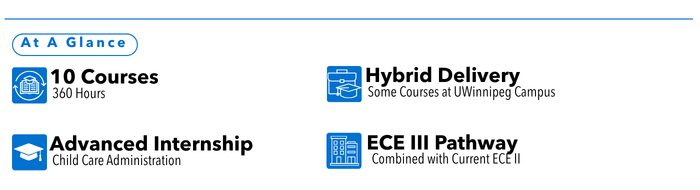


The program consists of two components: the Core Courses and Elective Courses. Students may take the courses in any order as long as they have the required prerequisites. Students have up to five years to complete the 360 hours of study. Students may condense their studies by taking more than one course per term.
Please note the following courses are degree-credit courses offered at The University of Winnipeg main campus. Students are encouraged to take them in the latter part of the program.